
Fáilte {Welcome}
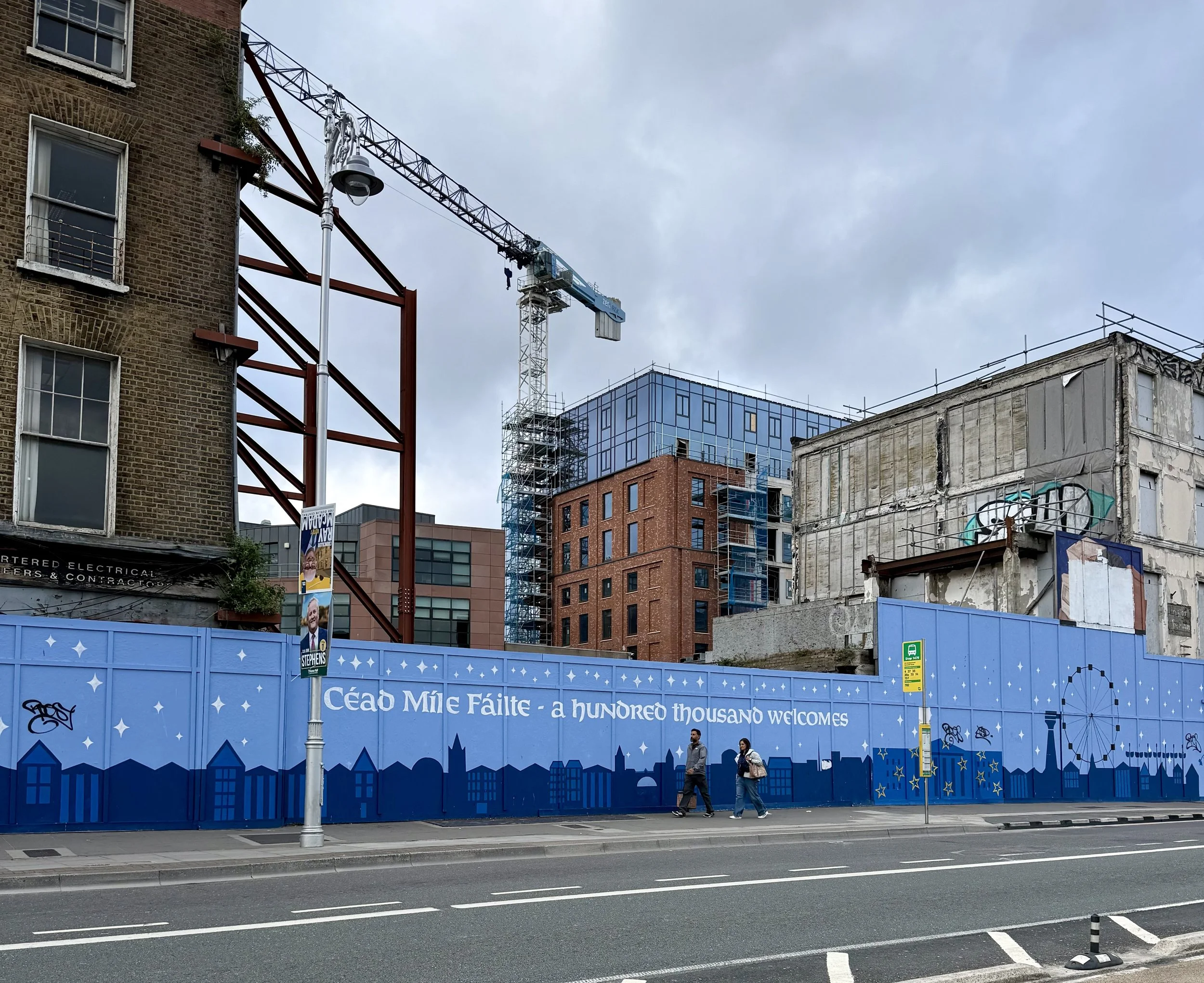
The Streets of Dublin, May 2026
Fáilte, “Welcome” - a word used in both the colloquial and traditional Irish tongue to cultivate a spirit of hospitality, of community, of reception. It is a salutation, a keystone piece of larger phrases, and a communication of acceptance - all this I offer to you, dear reader. Tá fáilte romhat, you are welcome.
I’m so very glad you’ve found your way here. Now, you are probably wondering who I am, beyond the pleasantries.
Is mise Shaun, I am Shaun, an Irish American folk witch born and raised in the northern Appalachian mountains on Turtle Island. I set my roots on the Kittatinny Ridge in Pennsylvania, a very unique corner of Appalachia marked out by deep immigration lines, coal country, and crossroads of the Underground Railroad. We live on Lenni Lenape Indigenous land, at the seat of the Munsee peoples in the Minisink Valley. The land from which I have grown and loved holds various different cultural lineages, and I am exceptionally grateful to continue to discover and unearth the important histories that make up my home.
I come from many immigrant households. My people travelled from Europe to American shores on different boats, facing different struggles. They were farmers, wortcunners, miners, homemakers, canners, school teachers and blue collar workers. I come from a long line of healing and calloused hands - scarred from rocks, book pages, scythes and pick-axes. My folk always reached for better - better access to food, education, community, land - this is a truth self-evident in our histories as a diasporic people. My immigrant ancestors and relatives always had a home-made solution - a mustard seed pack for chest colds, or iron crosses at the door to ward against wayward spirits - cunning work that blended practical living and small magics.
It is my intention to explore this through archival record, academic study, and community outreach here, and exploring the margins of place for what lay at the wayside. How exactly did my folk integrate into this land - this place where native stewards were removed, and it was left to re-wild? How did they survive in the face of whiteness, industrialization, and prejudice? How did folk magic and folk ways meet in the middle of this? Surely, if you are reading this, I imagine you share this wonder too.
I have spent much of my life in communion with the natural world around me - quite literally with bare skin pressed against trees, grasses and bugs - but divorced from ancestral meaning that lay alongside native and naturalized Earth medicines and stories. It has been through the journey of reconnection that these stories - weaved through my childhood like crocheted yarn - began to push against the preconceived notions of my ambivalence and distrust. My rejection of difficult family ties and histories therein caused a rift between myself and my lineage, my inheritance on this soil I was planted in. I, an invasive species in a garden of stronger plants - those that matured with me, shared relations, but didn’t struggle as I did - and those that came before, were looking down. I watched on, from my disturbed soil, feeling empty.
I rejected who I was for a long time. I rejected the family I was born into - due to treatment I shouldn’t have endured - and the legacy of my name. I aligned anything Irish or from Ireland with a group of people I couldn’t bear, nor understand. Bad actors corrupted the way I held my identity, and lived in it. I am sure many of us who come from toxic and disruptive homes can understand this feeling.
So, I continued to turn to Earth as my guide when I left the Catholic church, still adrift, moving in and out of spiritual circles that felt half-formed, performative, and lacking.
It wasn’t until I connected deeply with a new friend in my early twenties that I began to feel at home again within my Irish diasporic culture. This friend challenged me - pushing against my distrustful thinking and reminding me of my ignorance: of just how much I didn’t know about the emigrant culture I was born into. We were many things, us emigrants: a displaced people, an incredibly strong people, a deeply spiritual people, and - in some ways but not all ways - a troubled people. Suddenly, as I delved more into the stories, myths, and histories of my folk, I started to understand my family more. Their struggles, personalities, and outlooks in many ways stemmed from their histories - both individual and collective. Our history here as Irish Americans is fraught with strife - the rejection of anything Fenian or Paddy by this country at the turn of the century and our resulting assimilation into whiteness, the dismissal of the storyteller, the dangerous stereotypes - was all a fight for survival in those early days. And now, many Irish Americans’ participation in the damaging conservative movement on these shores calls into question our value and unique culture as an emigrant group. But who are we, really, and who am I?
We are more than just the measure of what grows on the surface - when you scape off the moss and grasses, you’ll find that beneath we are much more than shamrocks and alcoholism. We are so much more than the reductionary and cliché products sold by big box stores in March, or “kiss me I’m Irish” shirts, or your granny’s soda bread recipe. The Irish diaspora in North America, England, Australia - and with strong footholds in many other areas of the world - are individual groups with stories of their own - who helped build cities, infrastructure, revolutions, ballads, unions - and so much more. We cannot ignore their contributions, but, we also cannot ignore their bad choices, either. All of which I intend to explore - the good, the bad, and the ugly.
So, let’s throw another brick of peat onto the fire and dig into their stories le chéile, together.
Welcome and Fáilte, to the Irish American Folk Magic Blog.
Le grá {With love},
Shaun, the Wee Moss Witch